Arcade Whale


Arcade Whale OriginalMade in-house, free to play
Blackout
- Developer
- Arcade Whale
- Genre
- Shooting
- Released
- Updated
- Platforms
- Browser (desktop, mobile, tablet)
- Orientation
- Landscape
- Players
- Online multiplayer
How to play
Desktop W/A/S/D or arrows to move · mouse to aim your light · Shift focus · Space decoy
Touch Left half for the stick, right half to aim
About Blackout
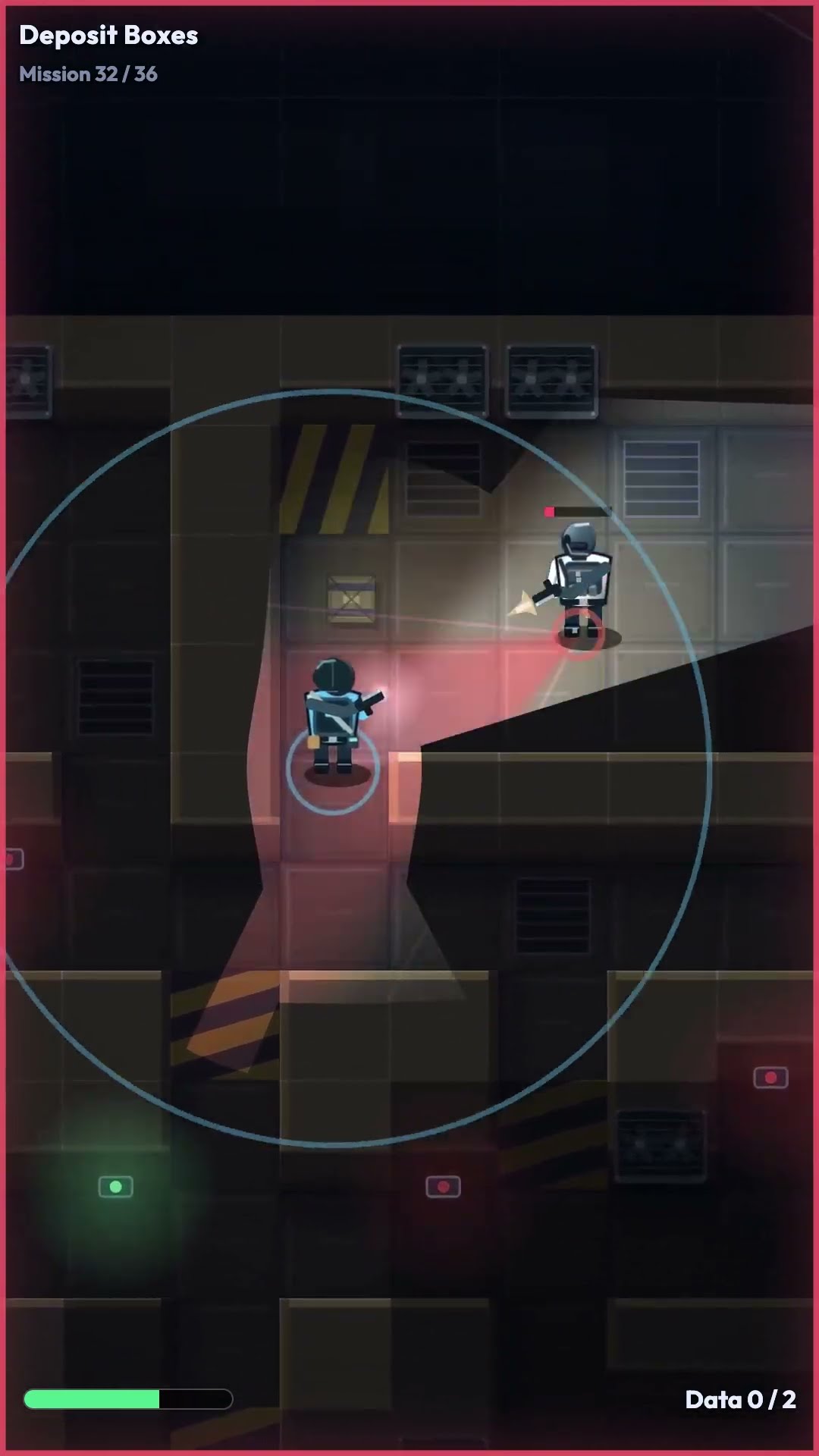
Blackout is a top-down tactical shooter played almost entirely in the dark. Your flashlight throws a narrow cone in front of you and that cone is all you get: walls block it and corners hide behind it. You can make out the faint outline of the floor plan, but who is standing in a room you have not looked into stays a mystery until your beam gets there. The whole game is built on that one restriction, because it applies to the guards as well as to you.
That symmetry is where the tension comes from. Every guard carries a light too, and their beams sweep across the same floor yours does. Long before a guard walks into view you will see his light crawl around a corner and slide over the ground in front of you, which tells you exactly what you need to know and nothing more: someone is there, roughly there, facing roughly that way. Reading those beams is the skill the game is really teaching, and it is the difference between walking into a room and waiting three seconds for the room to tell you what is in it.
There is no aim button. You fire automatically at any hostile your beam actually reaches, which means the question is never whether you can hit someone — it is whether you saw them first. Shooting a guard who has not spotted you does triple damage, so a fight you started from the dark is usually over in one burst, while a fight that starts with him seeing you is a fight you will probably lose. Positioning is the entire combat system.
Firing is not free, though. A gunshot is loud, and sound goes through walls that light cannot. The ring that expands from every shot shows you exactly how far that noise carried, and any guard inside it will come to look — not knowing where you are, but knowing where you were. Kill one guard carelessly and you have told three others roughly where to search, which is how a clean approach turns into a running fight.
Guards do not simply forget you either. Seeing you puts a guard on alert and he will chase; losing sight of you does not reset him, it drops him into a search around the last place he saw you, and only after that does he drift back to his patrol. Ducking behind a wall buys you a few seconds to reposition, not a fresh start.
The hand-built missions run across six sectors, and each sector introduces one idea rather than more of the last. Intake is about light and corners. Pump Hall is about noise, where the maps open up and a single shot reaches further than you would like. Cell Block simply puts more guards in your way and asks whether you have actually learned the first two. Some missions ask you to clear every hostile; others hand you data drives to grab and an exit to reach, and leave it up to you how much shooting that involves.
The fourth sector changes what a guard is. Up to that point every beam has the same shape, so the only question a room asks is where to stand. Then you meet a searchlight, whose beam is thin but reaches half again as far as your own — it locks a corridor end to end, and the only way past is along its blind flanks or while it sweeps elsewhere. And you meet wardens, which are the exact opposite: a floodlight that covers everything within a few paces and sees nothing beyond that. A searchlight punishes you for walking towards it; a warden punishes you for getting close. Put one of each in the same building and every route becomes a trade.
The Core sector adds wall cameras. A camera cannot be shot and never moves; it sweeps a purple beam back and forth, and if that beam finds you it radios every guard in range to your position. The answer is not a faster trigger but timing: cross while the sweep is turned away, or take the long way round. The last sector is the Vault, where lifting a drive trips the building alarm. Every guard heads for the strongroom and keeps getting your position for the next twenty-odd seconds, so the real puzzle in the Vault is planning the way out before you touch anything. The final mission, Blackout, puts every kind of guard and a camera in one building.
Each mission awards up to three stars: one for finishing, two for finishing above half health, three for never being seen at all. Next on the end-of-mission card takes you straight into the following mission, and the facility never runs out: after the final building the night shifts begin, where the late missions come back mirrored, never the same building twice in a row, with guards that hit a little harder each round.
Between missions you can spend credits on field gear — a longer beam, heavier plating, or an extra decoy. All are permanent, all are capped, and none of them shortens a mission for you.
You also carry two tools into every mission. A decoy is thrown where you are pointing and the noise pulls a guard over to investigate — it is the only way to move someone off a doorway without firing a shot, and it does not raise the alarm. Focus narrows your beam into a long thin one, so you read a corridor far earlier than usual; the cost is your peripheral vision, and anyone circling to your flank arrives unseen. Deciding which one a room needs is most of the game.
Live Duel drops two to four players into the same dark arena with identical kit. There is no loadout to master and no way to switch your light off, so the tension is the same one the campaign teaches, turned on another person: the beam that lets you see is the beam that says where you are. A shot from an angle your target never checked does triple damage, which means a duel is usually decided before either player fires. Narrow your beam to watch a long corridor and your flanks go blind; widen it to cover the room and you light yourself up from further away. The first fighter to five kills wins, and a board in the top corner keeps every score in view, with a match point warning when someone is one kill away. A fighter who goes down lies still for two seconds and comes back at the start point furthest from the others. The game opens straight into the campaign with no menu in the way; once you have cleared the first mission, the Duel button in the top bar finds opponents for you, and any seat still open when the duel starts is taken by a rival, so the arena is never empty.
It runs in the browser with nothing to install, works with a keyboard or by dragging anywhere on a touchscreen, and remembers the mission you reached.
Move with WASD or the arrow keys and point your light with the mouse - the mouse never moves you, it only aims. On a phone, press the left half of the screen for a movement stick and the right half for an aim stick. There is no fire button: you shoot automatically at any hostile your beam actually reaches, so the game is about where you stand and which way you face. Shooting someone who has not spotted you does triple damage.
SHIFT toggles FOCUS, narrowing your beam into a long thin one; SPACE throws a decoy, whose noise pulls a guard away without raising the alarm. Every shot is loud and the ring shows how far the sound carried; enemies hear through walls even though they cannot see through them. Watch for enemy beams sweeping the floor - a thin long one is a searchlight, a wide short one is a warden.
Live Duel puts two to four players in the same dark arena with the same kit: there is nowhere to hide, because the beam that lets you see is the beam that shows where you are, and the first shot from an unseen angle does triple damage.
Blackout tips & strategy
Start every fight from the edge of your beam
Your light reaches 9.5 tiles and a regular guard or patrol sees 8.2, so a guard heading your way enters your beam before you enter his. Stand still in the dark facing his route and let him come. Your first shot lands as an ambush for 36 and the second finishes him, since a guard has 42 health. Let him see you first and the same guard takes four hits while firing back. Each Optics level adds 1.1 tiles to that lead.
Switch on Focus to outreach a searchlight
Focus stretches your beam to one and a half times its length, about 14.3 tiles with no upgrades. A searchlight sees 14, so with Focus on you can hit him from just outside his own beam, and because he stands still while on watch, your shots land. Every Optics level widens that margin. Switch Focus off once he is down: the narrow beam leaves your sides dark right when the gunfire is pulling other guards in.
Use your decoy every mission to open a window
Decoys refill at the start of every mission, so saving one gains nothing. It flies about 4.6 tiles the way you face, or stops at the first wall. Guards within 9.5 tiles go to check, and every wall between them and the noise cuts that reach. The pull does not last: a guard walks over, searches for five seconds and heads back, so a standing guard or a searchlight is on his post again about 7 to 10 seconds after the decoy lands, watching the way he walks. Patrols and wardens wander back to the area around their post. Cross while they are away, not after.
Shoot first and you can still earn the ghost star
The third star only asks that no guard or camera ever spots you. A guard you hit before he sees you turns toward you, but that does not count, and two quick shots end it. What breaks a ghost run is the next guard: every shot carries up to 11 tiles, less through walls, and whoever comes to check and finds you in the open has seen you. Fire, then back into cover facing the way they will come.
In the Vault, break contact before you run
Lifting a drive starts a 24 second alarm, and lifting another starts it over. Every 4 seconds, any guard within 12 tiles of you hears where you are now, and each wall tile in between cuts that reach by 1.6. An open corridor keeps feeding them your position; a route behind walls goes quiet fast, and you outpace every guard. The ones who answer have not actually seen you, so a corner ambush still does triple damage.
Frequently asked questions
How do I aim and shoot?
You do not aim at all. Your character fires automatically at any hostile your flashlight beam actually reaches, so the game is about where you stand and which way you are facing rather than about reflexes. This also means it plays identically on a phone and on a desktop, since there is no second control to manage.
Why can I see a light with nobody holding it?
That is an enemy flashlight. Every guard carries one and it lights the floor exactly like yours does, so a beam sweeping around a corner is a guard you cannot see yet. Learning to read those beams is the core skill in the game and it is usually the earliest warning you will get.
Why do guards come at me after I shoot?
Because gunfire is loud and sound travels through walls even though light does not. The expanding ring after each shot shows you how far that noise reached, and any guard inside it will investigate the spot you fired from. Killing one guard noisily is often what alerts the next two.
What does hitting an enemy who has not seen me do?
Triple damage. A guard who has not spotted you takes 36 damage per hit against 12 for one who has, which is enough to make an ambush end a fight almost immediately. It is the main reason the game rewards patience over aggression.
What are the different guard types?
There are four, and they differ only in the shape of their beam, not in how they think. A standard guard holds a moderate cone and stands his ground; a patrol carries the same beam but wanders. A searchlight has a thin beam that reaches far further, so it locks a long corridor but is blind to anything beside it. A warden is the reverse — a very wide beam that only reaches a few paces, so it owns the space around it and sees nothing at distance. Walking towards a searchlight is the mistake; walking close to a warden is the mistake.
Can I buy anything that makes a mission easier to skip?
No. The shop sells three things — a longer beam, extra plating and extra decoys — and each is capped at three levels. Nothing in it removes a guard, reveals the map or skips a mission, because handing you free information would undo the one rule the whole game is built on.
How do I start a Live Duel?
Clear the first mission and a Duel button appears in the top bar; from then on you can press it at any time. There is no start menu: the game opens on your current campaign mission, and Duel takes you straight to a table with two to four players. The first to five kills wins, and the board in the top corner shows every score. The Menu button brings you back to the campaign.
What do the security cameras do?
Cameras appear from the Core sector on. They cannot be shot and never move, but their purple beam sweeps a room, and if it catches you the camera radios every guard in range to where you stand. Time your crossing for when the sweep is turned away, or find the side it never looks at.
Do the missions run out?
No. The hand-built missions run through six sectors, and after the last one the night shifts take over: the late missions return mirrored, never the same building twice in a row, and the guards hit a little harder every round. The mission number keeps counting up. Each mission gives up to three stars, with the third reserved for finishing without ever being seen.
Does it save my progress?
Yes, automatically in your browser. You come back to the mission you reached, with your best stars per mission, your credits and any gear you bought intact.