Arcade Whale


Arcade Whale OriginalMade in-house, free to play
Corefield
- Developer
- Arcade Whale
- Genre
- .io
- Released
- Updated
- Platforms
- Browser (desktop, mobile, tablet)
- Orientation
- Landscape
- Players
- Single player
How to play
Desktop W/A/S/D move · Space boost (short cooldown)
Touch Left stick moves, right side aims; FIRE pad on Manual, Auto fires for you
About Corefield
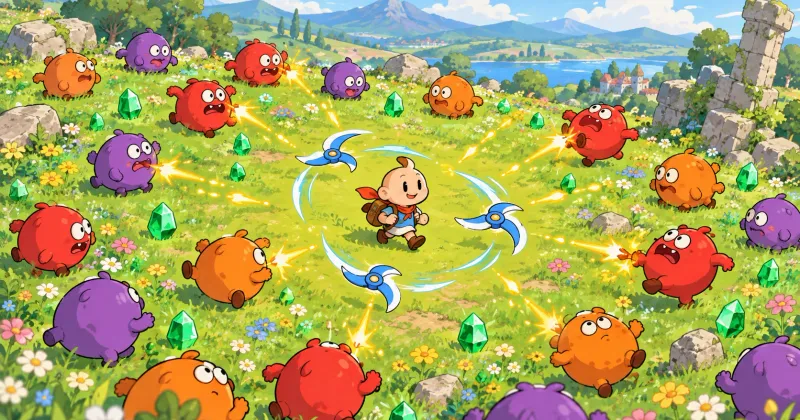
Corefield is a free online .io arena game you play in the browser, with no download and no account. You pilot a single drone across a bright open field scattered with energy cores, and the whole run turns on one trade: siphoning a core means holding still on top of it, and holding still is exactly how you get shot. Everything else in the game grows out of that one decision, made a few hundred times a run.
There are three ways to play it. Classic is a three-minute round against fifteen rivals, ranked by cores at the bell; dying costs you a share of your cores and a few seconds, then you respawn with your level and upgrades intact, so a death is a setback rather than the end. Your first Classic is the learning round: a rival that goes down loses everything it carried. Win one and the field tightens for good - from then on rivals keep their cores when they respawn, exactly as you do, so first place has to be defended. A Classic field also carries four low concrete L-walls in a loose ring around the middle, placed differently every round: bullets stop dead against them, drones have to go around them, and a drone that rests beside one without being hit for a moment slowly repairs - so when your health bar turns red, the question becomes which wall is closest and who is watching it. Battle has no clock: the field shrinks from the first second, nobody comes back, and the round is over when one drone is left. Solo Run puts you alone on the field for two minutes to see how many cores you can bank without anyone shooting at you - the quiet way to learn the map and the cards.
Cores are how you grow. Sit on one long enough and it charges into you, and enough charge takes you up a level. Every level hands you three upgrade cards and you keep one. They are not a straight line of bigger numbers: Spread Barrel turns your single shot into a three-way fan, Lance Rounds fire faster shots that are harder to sidestep and punch through an extra body, Bounce Casing sends your shots ricocheting off the arena wall, Core Magnet drags loose cores toward you and quietly changes where you can afford to stand. The deeper cards change the run more sharply still - a turret you drop as you boost, paint that makes a target take more damage from everyone, a cloak that hides you from enemies if you can bear to stand perfectly still.
Your guns never jam, so the pressure is on positioning instead of trigger discipline. Boost is the one thing you have to ration: a short burst of speed with a cooldown, shown on the bar under the field. It gets you off a core the moment a hunter turns your way, closes the gap on a wounded raider, or carries you back inside the shrinking circle in Battle - and if you spend it early, you are slow at exactly the wrong moment. Take the Thrusters card and every boost also lets bullets pass straight through you while it lasts. Every drone carries a health bar over its head, yours included, so you can see who is worth a fight before you start one.
The field is never empty. Rival drones hunt it constantly, and they are not one behaviour wearing four names - a harvester runs from a fight and works the cores, a hunter comes at you from range, a raider waits for something already hurt, a sentinel holds an area. You can tell them apart on the field without reading a label: a sentinel wears four teeth around its hull, a raider trails a forked tail, a hunter carries two horns and a longer barrel, and a harvester is the plain round drone. They lead their shots, they break off when they are losing, and they boost when the shrinking field is about to bite them. In Classic the pressure is paced rather than flat. Every rival starts the round as a harvester - it works the cores and runs from trouble - and the sentinels, raiders and finally the hunters filter in as downed drones come back over the next couple of minutes, so the arena you learn in is genuinely quieter than the one you finish the round in without the map ever being emptier. Battle has no respawns, so the shrinking field paces it instead: the starting fifteen are mostly harvesters with a few sentinels, and as the circle closes the higher-level half of the survivors steps up a type - harvesters dig in as sentinels halfway through the shrink, sentinels turn raider soon after, and some way before the final circle raiders become hunters - each step announced with a banner and a ring around every drone that changed. New drones get room to breathe on top of that: a low-level rival is left alone from range. When any drone dies its cores spill across the ground, which means the spot where a fight just ended is also the richest ground on the map.
Then the field itself starts interfering. A cluster of cores drops into one corner and everybody sees it at once. A bounty goes on whoever is leading and killing them pays triple. The outer field collapses inward and the safe circle shrinks, which takes running away off the table for a while. A prime core worth six levels appears with two neutral guns sitting on it. Every core on the map slides toward the middle. The sensors black out and names and health bars vanish, so you are picking targets off silhouettes alone. Each of those happens once in a round, paced to the mode you picked: Classic fits all six into its three minutes, Battle packs its five between roughly the 40-second and 110-second marks so they land while most drones are still alive, and leaves out the collapse because its field is shrinking anyway, and Solo Run keeps only the cluster, the prime core and the drift. Play free on desktop or phone.
Runs leave something behind. Besides the blue starter drone, five skins are tied to things you actually did: bank sixty cores in a Solo Run, finish first in Classic, reach the top three in Battle, win a Battle outright, rack up thirty kills over time. The colour is cosmetic - no skin shoots harder or moves faster - but a rose or onyx drone on the field tells everyone how you earned it.
Move with W A S D, aim with the mouse and hold to fire. On a phone the left thumb drives and the right side aims and fires. Standing on a core is how you siphon it, and standing still is how you get shot - that trade is the whole game.
Boost with Space to break away; it recharges in about a second and a half, so it is a decision rather than a habit. Later upgrades turn that same boost into a weapon or a deployed turret, and Overclock doubles your fire rate for a few seconds after every kill.
Every level you pick one of three upgrade cards, and the deeper tiers open with your level rather than the clock: Tier 2 cards from level 5, Tier 3 from level 9. Steady harvesting will not reach Tier 3 inside a three-minute Classic round, so kills and the guarded prime core, worth six levels at once, are what put the strongest cards in your hand. When a drone dies its cores spill onto the field, so the place someone just died is also the richest place to be.
The opening of a Classic round is deliberately quiet: every rival on the field starts as a harvester that works the cores and runs from a fight, and the sentinels, raiders and hunters filter in as the round goes on, so the arena you learn in is not the arena you end in. Battle opens quiet too, with mostly harvesters and a few sentinels, and turns meaner as its field shrinks: by the final circle the strongest survivors are raiders and hunters.
Arena events land on a timer: a cluster drops in one corner, a bounty goes on the leader, the outer field collapses, a guarded prime core appears, every core slides to the middle, and the sensors black out so you only get silhouettes.
Frequently asked questions
Is Corefield free to play?
Yes. Corefield is free to play in your browser with no download, no install and no account. It runs on desktop and on phones, and your best run is saved locally so you can close the tab and come back to it.
What is the difference between Classic, Battle and Solo Run?
Classic is a three-minute round against fifteen rivals; when time runs out you are ranked by cores, and dying only costs you some cores and a respawn. Battle has no timer - the field shrinks from the start, eliminated drones stay out, and the last one standing wins. Solo Run is two minutes alone on the field, scored purely on how many cores you bank. Your stats from all three feed the skin unlocks.
What are the concrete walls in Classic?
Cover. Every Classic round places four low concrete L-shaped walls around the middle of the field, in a new spot each round. Bullets stop against them and no drone can pass through, so a wall breaks the line of fire. Rest beside one without being hit for about a second and a half and your drone repairs - green plus signs rise above it - but every second spent there is a second you are not siphoning cores. Rival drones use the same walls to hide and repair. Battle and Solo Run are played on an open field.
How do I unlock drone skins?
By playing, not by paying. Lime needs sixty cores in a single Solo Run, Rose a first-place finish in Classic, Mint a top-three finish in Battle, Ivory a Battle win, and Onyx thirty kills across all your rounds. Skins are purely cosmetic.
What does Boost do and why does it have a cooldown?
Boost is a short burst of speed on Space or the BOOST pad. It recharges in about a second and a half, and the bar under the field shows when it is ready. The cooldown is the whole point: if you could hold it forever nobody would ever be caught, so you spend it to escape a fight, to reach a core first, or to get back inside the circle in Battle.
How do I level up faster?
Cores are the steady income and kills are the spike. A core charges into you while you stand on it, so the fastest harvesting is a tight loop between nearby cores rather than long runs across the field. Killing a drone pays much more, and it pays more the higher that drone had climbed. When someone dies their cores spill onto the ground, so cleaning up after a fight you did not even join is often the best minute of a run.
Do I need other players online?
No. The arena is filled with rival drones that hunt, harvest, retreat and level up on their own, so a run plays the same whether anyone else is around. That was a deliberate choice: an .io game that needs a crowd is empty on the day you happen to visit.
Does Corefield get harder as a run goes on?
Yes, and it is the field that changes rather than the numbers. In Classic the arena is full from the first second, but every rival in it starts as a harvester, working cores and running from a fight. Sentinels, raiders and finally hunters filter in as downed drones come back over the next couple of minutes, so the pressure climbs without the map ever thinning out. In Battle nobody comes back, so the shrinking field sets the pace instead: the round opens with mostly harvesters and a few sentinels, and each time the circle closes another stretch the stronger half of the survivors steps up a type, until the last promotion, some way before the final circle, turns raiders into hunters. Once you have won a Classic round, rivals there also keep their cores when they respawn, so the race for first place stays close. The arena events run on the round clock in every mode: Classic gets all six before the bell, and Battle packs its five into the first two minutes.
What are the arena events?
Six things that happen once per run, on a timer, and each one changes how you play rather than just printing a message. A core surge drops a cluster into one corner. A bounty triples the reward for killing the leader. A field collapse shrinks the safe area and damages anyone outside it. A prime core worth six levels appears under two neutral guns. A magnetic drift pulls every core to the centre. A sensor blackout hides names and health bars for a while. Classic plays all six inside its three minutes, Battle packs its five into the first two minutes and skips the collapse because its field is always shrinking, and Solo Run keeps only the surge, the prime core and the drift.