Arcade Whale


Arcade Whale OriginalMade in-house, free to play
Flipfall
- Developer
- Arcade Whale
- Genre
- Puzzle
- Released
- Updated
- Platforms
- Browser (desktop, mobile, tablet)
- Orientation
- Portrait or landscape
- Players
- Single player
How to play
Desktop Tap a group of 2+ matching tiles to pop it · Q/E spin the tray · meet the Goal before Moves runs out
Touch Tap tiles, tap Spin
About Flipfall
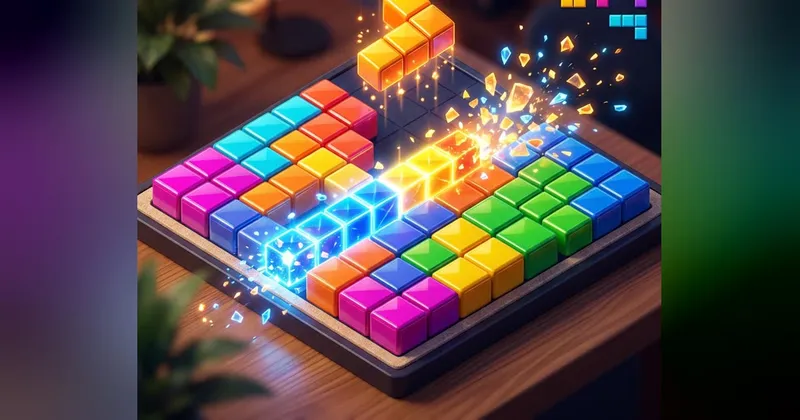
Flipfall is a free collapse puzzle you play in the browser, built on a board of glossy candy-coloured tiles stacked inside a brass tray. Tap any group of two or more touching tiles of the same colour and they pop: everything above tumbles straight down, new neighbours meet, and a tap that looked like cleanup suddenly reorganises the whole column. Every level hands you a goal chip at the top of the screen — clear this many tiles, collect this much of one colour — and a limited budget of Moves to do it in, so the question is never whether you can pop something, it is which pop moves you closest to the goal.
The twist is the tray itself. Two brass buttons spin the entire board a quarter turn, clockwise or anticlockwise, and every tile you have kept falls into its new columns afterwards. A spin is how you feed isolated colours into each other’s arms, how you turn two decent groups into one enormous one, and how you reach tiles that had nothing matching near them. Spins are counted per level rather than free, so the real decision in Flipfall is sequencing: do you spend a quarter turn now to set up a giant group, or bank it for later when the board has tightened up? Players who never touch the compass finish levels; players who time their spins finish them with stars.
From level fifteen, big clears start paying rent. Pop a group of five or more and a black powder bomb is left sitting where the group was. Tap the bomb on its own and it blasts its entire row and its entire column at once — including through anything that cannot be popped normally — and if the blast crosses another bomb, that one goes off too, chain and all. Bombs are also how you answer the rocks that appear from level twenty-five: grey cracked stones fall like tiles but never match a colour, so you chip them by popping groups beside them — two hits breaks a stone — or delete them outright with one blast.
Level thirty-five adds the piece that makes the compass matter most: the gem. A faceted blue diamond falls with everything else, it can never be popped or blasted, and it is delivered the moment it reaches the glowing strip along the bottom edge. Since gravity only runs straight down, the way to steer a gem sideways is to turn the tray under it — drop it into a pocket, spin a quarter turn so it hangs over fresh space, pop what was holding it, and let it fall again. Delivering a gem is less a move than a small route planned across three or four turns, and the mixed levels from fifty-one on ask for a gem, broken stones and colour quotas all in the same board.
Sixty levels make the campaign, in six phases that were measured rather than guessed: a reference bot that plays a sensible greedy game clears fifty-seven of the sixty within their move budgets, which is how a puzzle game proves it is hard instead of broken. Levels pay coins by stars earned — stars come from finishing with Moves to spare — and coins buy Hints in the shop. If a board ever dead-ends with no matches left, the game does not punish you for arithmetic that stopped adding up: the remaining tiles reshuffle free, and play continues. Run out of Moves entirely and you can retry instantly.
Everything works with one finger: tap tiles to pop, tap Spin to turn the tray, and the same actions sit on Q and E for keyboard players, with P for pause. There is no download, no install and no account; your finished levels, stars and coins live in storage on your own device, so you can close the tab mid-campaign and come back to the exact level you left.
Frequently asked questions
How do I play Flipfall?
Tap any group of two or more touching tiles of the same colour and the whole group pops; everything above falls straight down. Bigger groups score far more than small ones, so the game is really about arranging big meets before you commit. The Goal chip at the top shows exactly what the level wants — total tiles, a count of one colour, gems delivered, rocks broken — and the Moves counter is your budget. Q and E, or the two Spin buttons, turn the whole tray ninety degrees.
What does spinning the tray actually do?
It rotates every tile a quarter turn and then lets them all fall straight down in their new columns, so groups that could never touch — separated by gaps or wrong colours — can end up stacked together. Spins are limited per level and shown on the button, and they are the difference between clearing a level and clearing it well: most big combos in Flipfall are set up one or two spins earlier. Spins never cost Moves, only their own count.
How do bombs work?
Pop a group of five or more tiles and a bomb appears where the group stood. Tapping the bomb detonates it: its whole row and its whole column are cleared at once, including stones, and any other bomb caught in the blast detonates too, so two bombs crossing can wipe most of a board. Bombs cost nothing to place — they are earned by making big groups — but tapping one spends a Move, so it pays to wait until the cross covers something you actually need.
How do I break the grey stones?
Stones fall like tiles but never match a colour, so they cannot be popped directly. Pop a group next to a stone and the blast chips it — each stone takes two hits to break. A bomb blast is stronger: it removes any stone it crosses outright. Broken stones count toward rock goals, and because chipping rides on normal pops it rarely costs you extra Moves.
My gem will not go where I want. What am I missing?
Gems only ever fall straight down, so a gem stuck in the wrong column has to be steered: empty the pockets beneath it so it drops low, then spin the tray so it hangs over different ground, then clear what holds it. It counts as delivered the instant it touches the glowing strip at the bottom, gems survive every pop and every blast, and a gem that reaches the bottom row during a spin counts just the same.
What happens when I run out of Moves?
If the board dead-ends first — no matches anywhere and no spins left — the tiles reshuffle for free and you keep playing. When the Moves counter itself hits zero before the goal is met, the level ends and offers an instant retry. Neither costs coins unless you choose the shop, and a failed attempt never takes away progress from earlier levels.